Audit Management
Structured, transparent, and effective audit management.
Audit Management helps organizations plan, execute and follow through on audits through one structured and traceable process. It supports audit planning, question management, evidence capture, scoring, observations, recommendations and corrective actions.
Home > Audit Management
Why
Audits should create value, not just reports.
In safety-critical and compliance-heavy organizations, audits reveal how work is really performed, where gaps keep returning as well as what needs to improve.
-
Structured audit planning.
-
Consistent questions and scoring.
-
Evidence captured in one place.
-
Findings converted into actions.
-
Management insight across audits.
Challenges
Audits lose value when planning, evidence and actions are scattered.
Audit preparation often happens in files, emails, local templates and spreadsheets. Findings are captured, but follow-up gets messy. Humanity then calls this “process maturity”, which is ambitious.
-
Scattered audit preparation.
-
Inconsistent questions and scoring.
-
Evidence difficult to verify.
-
Findings not always tracked.
-
Limited management visibility.
How it works
From audit planning to lasting improvement.
Audit Management guides every audit through a clear lifecycle, from preparation and execution to action tracking and management review. Each step helps teams capture stronger evidence, assign clear follow-up and turn findings into measurable improvement.
1.
Audit planning.
Define theme, scope, objectives, dates, audit teams and preparation requirements.
2.
Audit execution.
Capture observations, evidence, photos, scores and recommendations in one process.
3.
Action tracking.
Convert findings into assigned actions with progress, evidence and close-out approval.
4.
Management review.
Consolidate findings, identify trends and turn audit results into improvement actions.
1.
Audit planning.
Define theme, scope, objectives, dates, audit teams and preparation requirements.
2.
Audit execution.
Capture observations, evidence, photos, scores and recommendations in one process.
3.
Action tracking.
Convert findings into assigned actions with progress, evidence and close-out approval.
4.
Management review.
Consolidate findings, identify trends and turn audit results into improvement actions.
Core capabilities
Everything needed to manage audits with confidence.
Audit Management brings planning, evidence capture, scoring, action tracking and also management reporting into one structured process. Each capability helps teams run audits consistently, follow up properly and turn findings into measurable improvement.

Audit planning.

Question database.

Pre-read and self-evaluation.

Real-time evidence capture.

Qualitative scoring.

Built-in action tracker.

Level 2 and level 3 audit support.

KPI and management reporting.
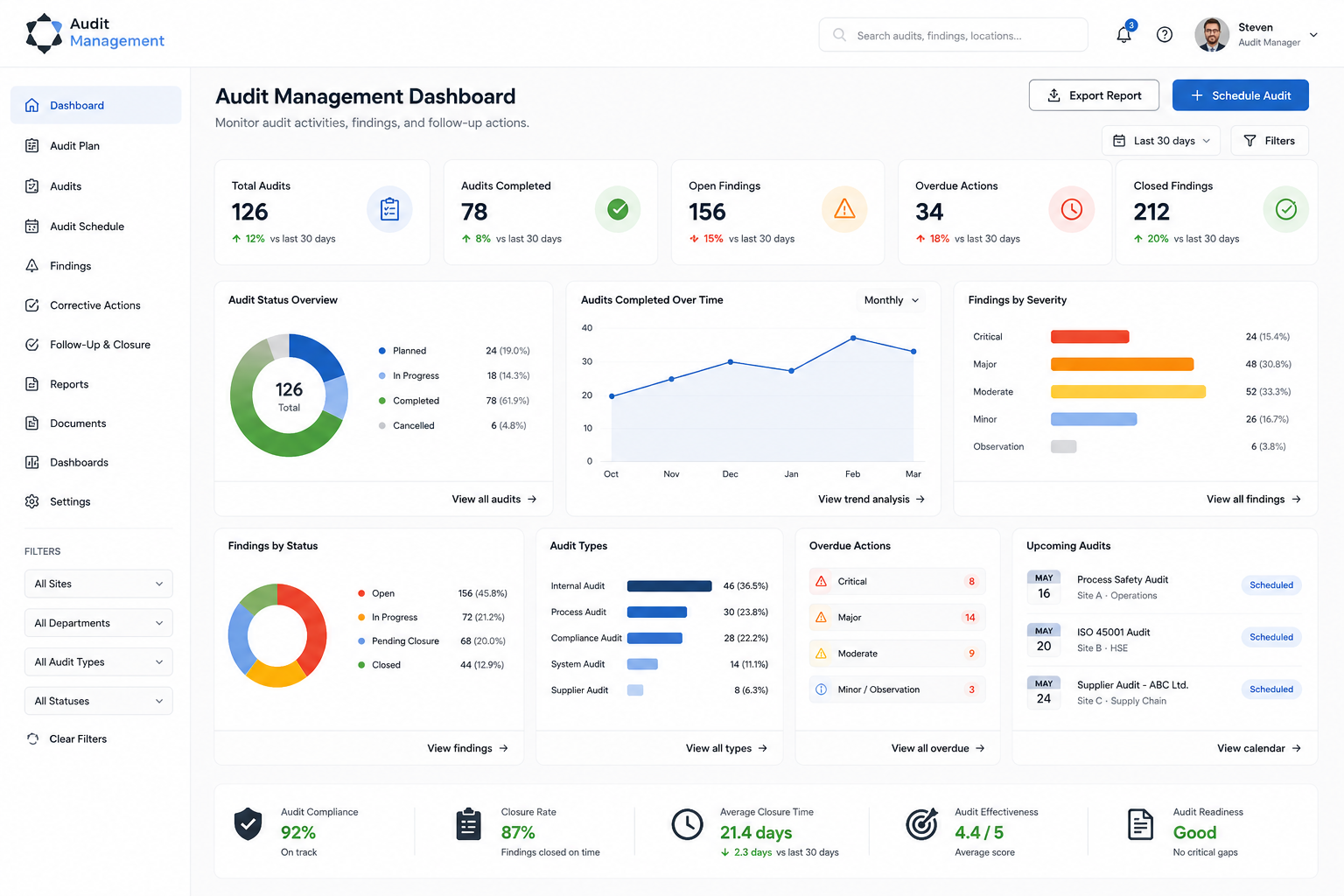
Dashboard visibility
Know what is planned, found, open and improving.
Audit Management gives auditors, site teams and management a clear view of audit progress, findings, actions, close-outs and recurring issues.
Benefits
What Audit Management changes in daily work.
Audit Management gives teams more than a cleaner audit process. It not only improves preparation, but also strengthens evidence, keeps follow-up visible and gives leaders the insight needed to turn findings into real improvement.
Better preparation.
Teams know what will be audited and what evidence is expected.
Stronger evidence.
Observations, photos, scores and findings stay connected.
Clearer follow-up.
Findings become assigned actions with owners, deadlines and proof.
Smarter insights.
Leaders see trends, recurring gaps and improvement priorities.
Better preparation.
Teams know what will be audited and what evidence is expected.
Stronger evidence.
Observations, photos, scores and findings stay connected.
Clearer follow-up.
Findings become assigned actions with owners, deadlines and proof.
Smarter management insight.
Leaders see trends, recurring gaps and improvement priorities.
Who it's for
Built for every team involved in audits.
Audit Management supports everyone involved in a successful audit, from planning and preparation to execution, action tracking, and management review. As a result, auditors, site teams, contractors, HSEQ leaders, and executives can all work within one shared process, with clear responsibilities, stronger evidence, and better visibility at every stage.

Auditors.

Site managers.

Contractors.

Line management.

HSEQ teams.

Executives.
See how Audit Management helps your teams manage audits from preparation to execution, action tracking and organizational learning.
Plan better audits. Capture stronger evidence. Close actions properly.